
Logan Federal Release Paths
No BOP prison was found in Logan County. Federal sentenced custody still matters when a Logan resident, local arrestee, or person once housed locally enters the federal system. BOP handles sentenced federal prisoners. USMS manages many federal defendants from court-ordered detention through acquittal or delivery to BOP, often using state, local, or private beds. A person can therefore leave Logan’s roster through federal pickup without entering the community.
BOP’s public locator covers federal inmates from 1982 to the present. USMS offers no comparable public historical release locator. For a sentenced prisoner, use BOP. For a federal pretrial matter, use the federal docket and USMS context. For older federal custody, use National Archives routes. Keep each agency’s loss of custody separate from the question of final freedom.
Confirm a Logan Federal Release
- Search the BOP Inmate Locator by exact register number when possible.
- If no number is known, search name with age, race, and sex filters cautiously.
- Read Location and Release Date together.
- Check the federal docket for sentence, acquittal, dismissal, and supervised-release terms.
- If the person was pretrial, use USMS and court context rather than expecting a BOP history.
- Check ICE or a state system when a detainer is possible.
The BOP register number uses five digits, a hyphen, and three digits. A system-specific number sharply reduces similar-name errors. Results may show name, register number, age, race, sex, release date, and location. A past date with no facility, or Location “RELEASED,” means BOP no longer holds the person. A future date is projected. “UNKNOWN” means the term is not determined.
Read BOP Released Results
BOP extracts locator data daily. Its released status answers a narrow question: whether the person remains in BOP custody according to that system. Federal supervised release can follow imprisonment. Another sovereign can also take custody on a detainer. Do not convert “RELEASED” into “all legal obligations ended.” The federal judgment and docket can identify supervision terms, while the receiving agency identifies continued custody.
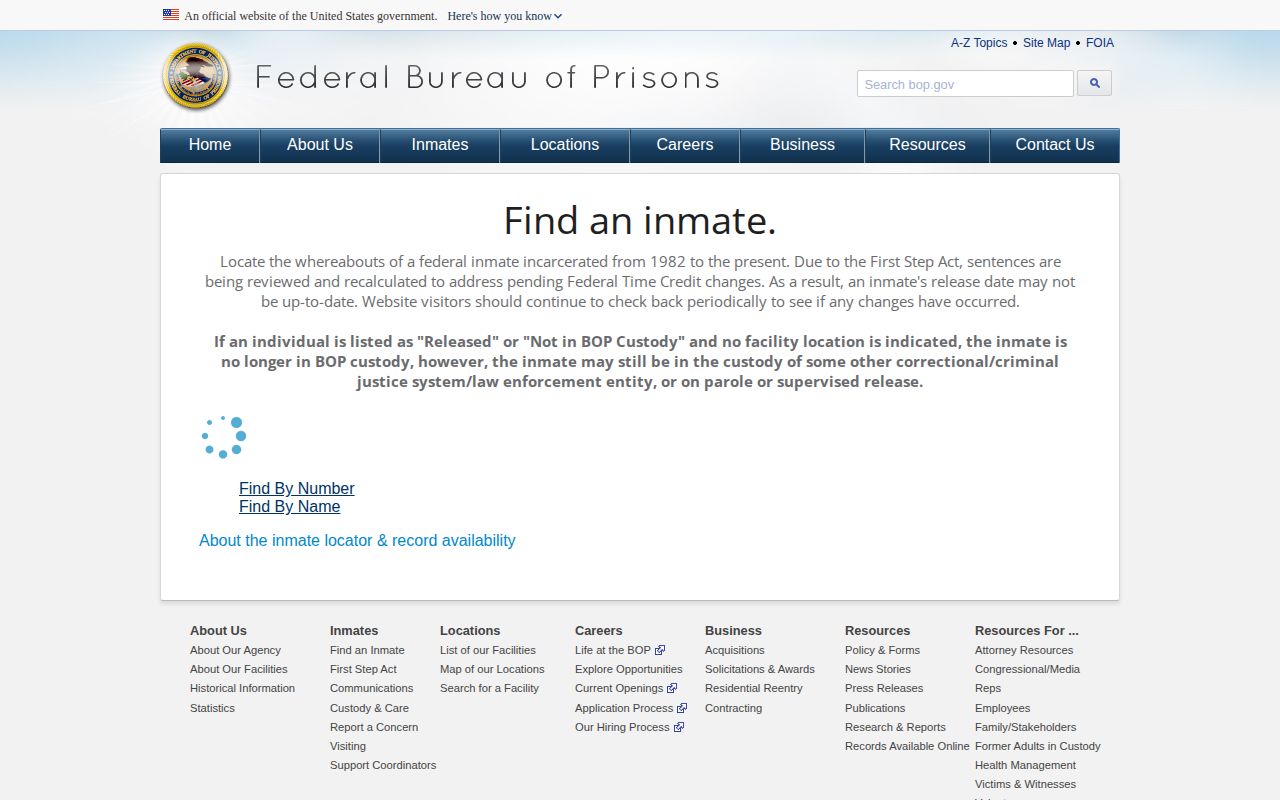
The BOP locator explanation describes record scope and interpretation. The image below comes from the official locator source listed for this page. It shows the federal search interface and reinforces why the register number is the strongest search key.
USMS Release Records for Logan
The U.S. Marshals Service prisoner program covers federal defendants during the judicial process. USMS says most prisoners in its custody are housed under agreements in nonfederal facilities. That creates a common ambiguity: disappearance from a county roster may mean transfer into federal custody, not release. There is no public historical USMS locator that resolves the full sequence.
Use PACER or the relevant federal docket to identify detention orders, dismissal, acquittal, sentencing, and delivery to BOP. Court disposition establishes legal action, while a custodial agency record establishes physical movement. USMS generally does not release booking photographs to the public. Do not infer a federal release date from a local booking image or roster removal.
Federal Records Before 1982
BOP locator coverage begins in 1982. A no-result for earlier custody does not prove that no federal record exists. The National Archives federal prison records guide is the appropriate historical route. Fuller modern BOP records may require a Freedom of Information Act request, subject to identity, privacy, and exemption rules.
When requesting records, provide the exact name, register number, date of birth, institution if known, and date range. Ask for existing release or transfer records rather than demanding a new narrative. A record can establish the agency event while leaving supervision or a different custodian to another source.
A federal search should also retain the Logan County starting point. Check the official detention page, the county sitemap, and the Logan court office when the custody chain began locally. The current roster can show only present local listing. The jail record can show a federal recipient if recorded. The court file can preserve the state case action that preceded pickup.
Keep those local dates beside the federal result. A gap between county departure and BOP admission can reflect USMS pretrial or transportation custody. It does not establish an unrecorded period of freedom. If the federal docket identifies a detention order, use that order for legal context while continuing to use agency records for physical custody.
Logan County and Federal Custody
Logan’s current-inmate list is not a federal release source. It can show only whether the person appears in current local custody at the check time. A federal docket can explain why USMS became involved. BOP can later show sentenced custody and a release date. ICE’s current-custody locator addresses a separate civil immigration system.
| Custody stage | Primary public route |
|---|---|
| Logan jail | Current roster, VINE, jail release entry |
| Federal pretrial | Federal docket and USMS context |
| Federal sentenced | BOP locator |
| Post-1982 historical release | BOP locator and FOIA |
| Pre-1982 prison record | NARA |
| Possible immigration hold | ICE ODLS |
Federal Release Follow-Up
Match the person using a register number plus another identifier. Save the result date and the time checked. Then read the judgment for supervised-release terms and search a receiving agency if the record mentions a detainer. If the local and federal dates differ, label both. The Logan jail departure date and BOP release date can describe different points in a custody chain.
For a complete county-first workflow, use the Logan County released inmate search. It explains when VINE, the jailer, Kentucky corrections, federal records, and ICE each apply. Similar names alone are not enough to merge records from those systems.
The locator does not display a complete correctional file. A focused federal request identifies full name, date of birth, register number, institution if known, and a useful date range. Ask for existing release or transfer records, not a new calculation. Privacy rules and exemptions can limit disclosure. Preserve the docket number with the register number to separate pretrial USMS movement, delivery to BOP, and eventual BOP release.
A Logan jail departure, USMS transfer, BOP admission, projected date, and actual BOP release can differ. The local record answers when Logan stopped holding the person. The docket answers what the court ordered. BOP answers the sentenced stage. If BOP shows release while the judgment imposes supervision, report both. Follow any state or immigration detainer before describing community release.
Preserve the Federal Custody Chain
Keep copies of the Logan jail event, federal docket entry, BOP result, and any later receiving-agency record. Note when each was checked. That short source log distinguishes an actual change from a delayed database update and gives the correct office enough detail to review a disputed record.
Separate Federal Release Stages
A federal criminal case can move through several agencies before BOP displays a released result. Logan may first record departure to another custodian. USMS can hold a defendant during the court process and place that person in a local or private bed. After conviction, BOP can receive the sentenced prisoner. Later, BOP can record release to supervision or another hold. One date cannot stand for this whole chain.
Read the federal docket for detention, dismissal, acquittal, judgment, and supervised-release terms. Use that record for what the court ordered. Use agency custody records for physical movement. A dismissal date may precede processing. A sentence date is not the BOP admission date. A BOP release date does not erase later supervision written in the judgment.
When the locator shows “RELEASED,” save the register number and check date. If a past release date appears with no institution, BOP explains that the person is no longer in its custody. Search a state or immigration system when the docket or release paperwork mentions another hold. Without such a check, the narrow statement “released from BOP custody” is more accurate than “free.”
Resolve Federal Search Problems
A misspelled name or incomplete filter can hide the right BOP result. Begin with the exact register number, including its hyphen. If searching by name, compare age and other displayed identifiers. Do not merge two results on name alone. For a pretrial defendant who never entered sentenced BOP custody, a no-result may be expected rather than evidence that no federal custody occurred.
Older records require a separate route because the public locator begins in 1982. Use NARA for earlier federal prison history. For modern detail beyond the locator, submit a focused FOIA request. The response may be limited by privacy and exemptions, but it can still identify the agency event that the public display does not explain.